Designing Little London: TMU PLAB Students Compete at the 2026 Environmental Design Competition
By Patricia Dunajski, Ishimwe Rushemeza, and Calvin Wong
How do we create a place where residents do not feel like they have to start over?
On April 11, 2026, Patricia Dunajski, Ishimwe Rushemeza, and Calvin Wong, three first-year students in the Urban and Regional Planning Post-Baccalaureate program at Toronto Metropolitan University, travelled to London, Ontario, to present their dementia village design at the 2026 Environmental Design Competition hosted by Fanshawe College.
The competition began with a first-round submission, where teams were tasked with selecting a site from the competition options or proposing one of their own. London, Ontario, was one of the site options provided, which became the foundation for the team’s project.
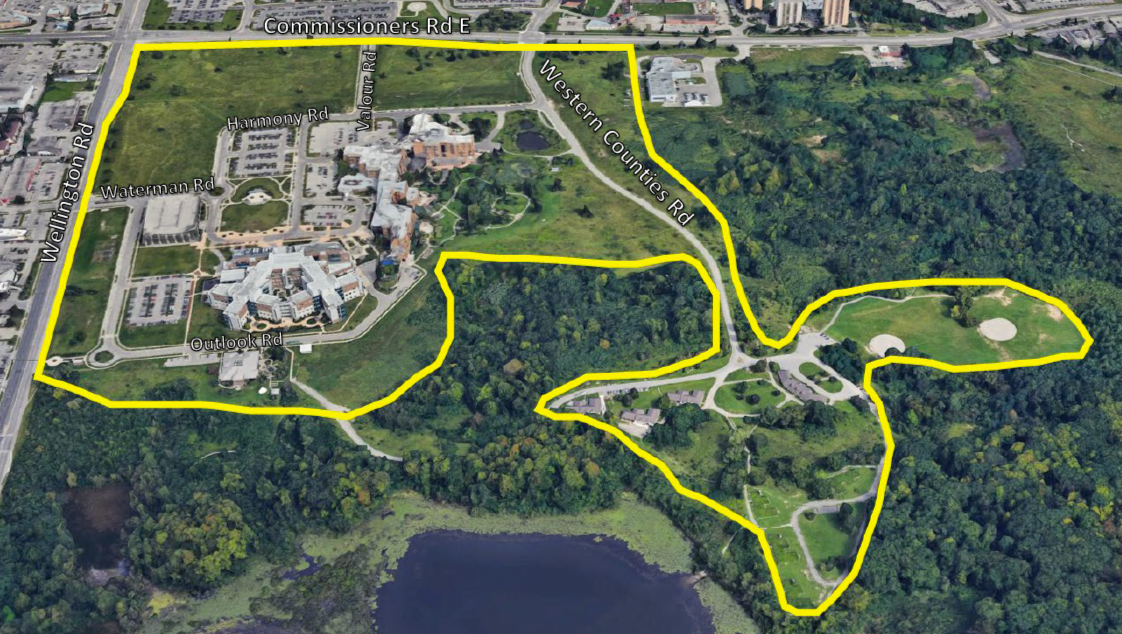
London original site.
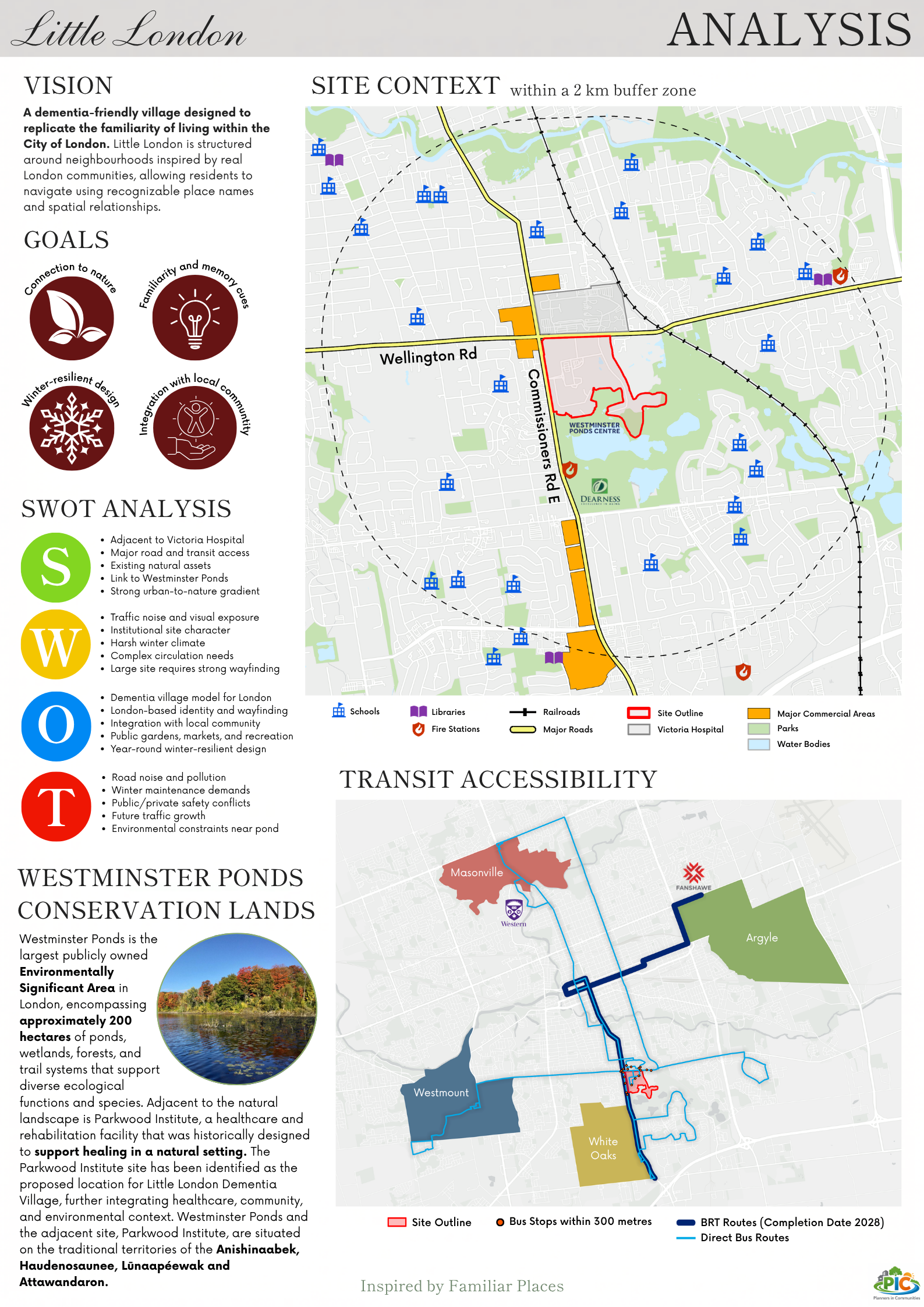
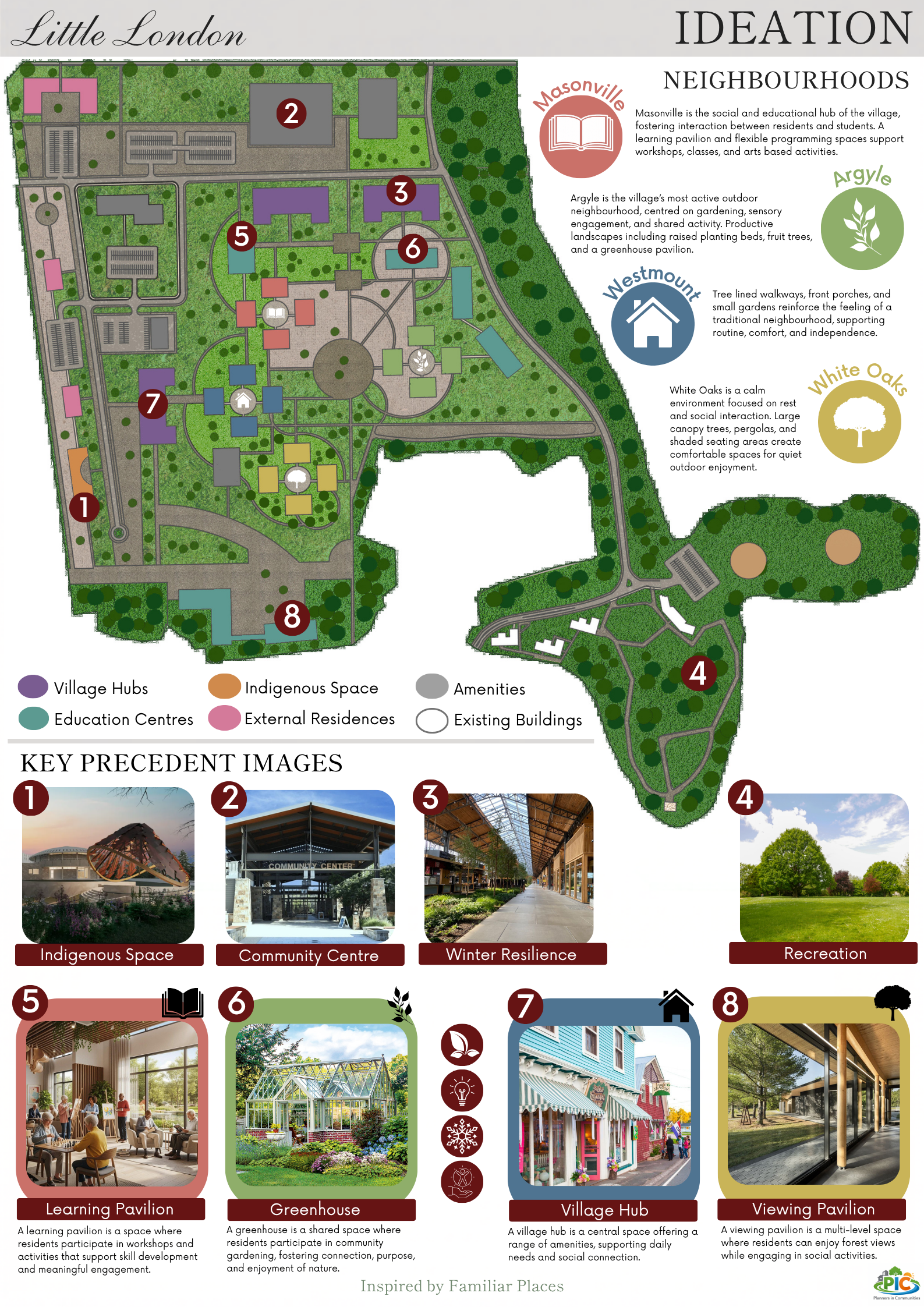
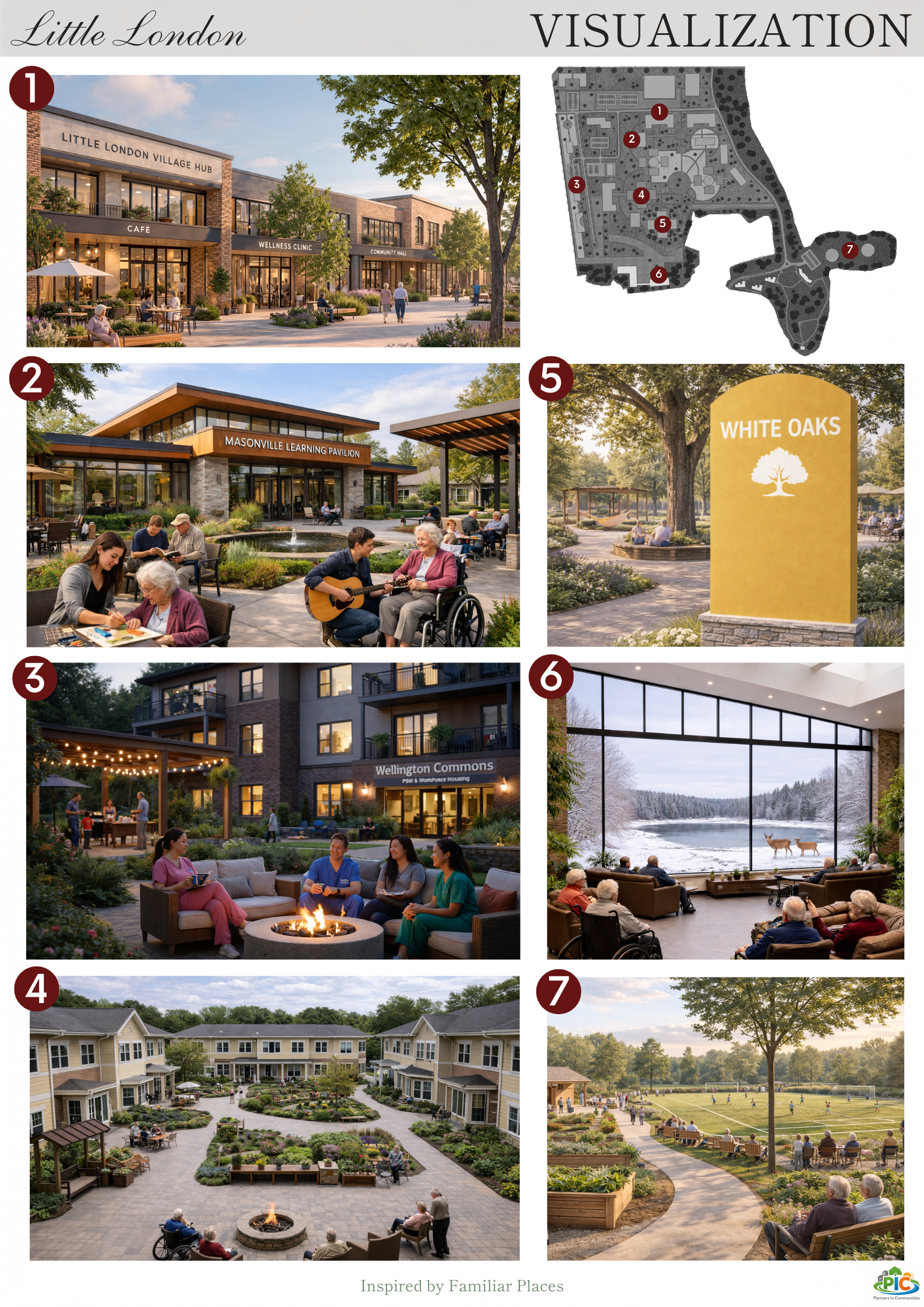
Little London’s three design panels.
Little London, a dementia village concept inspired by the neighbourhoods, landmarks, and everyday experiences of the city. Their submission included three design panels that presented the site analysis, design ideation, and final visualization of the village. From the first-round submissions, the top 12 teams were invited to present their projects in person at Fanshawe College. At the final presentation, the team shared Little London with a panel of five judges with backgrounds in Alzheimer’s organizations, urban design, wayfinding, and related fields.
Designing with familiarity in mind
For people living with dementia, familiarity matters. The spaces we design are not just physical environments; they shape how people feel, navigate, and understand the world around them. People living with dementia often rely on routine and familiar surroundings to feel safe. When those are disrupted, even simple environments can become confusing, overwhelming, and for many, the idea of having to start over can be one of the hardest parts. This raises a critical question that guided our design: how do we create a place where residents do not feel like they have to start over?
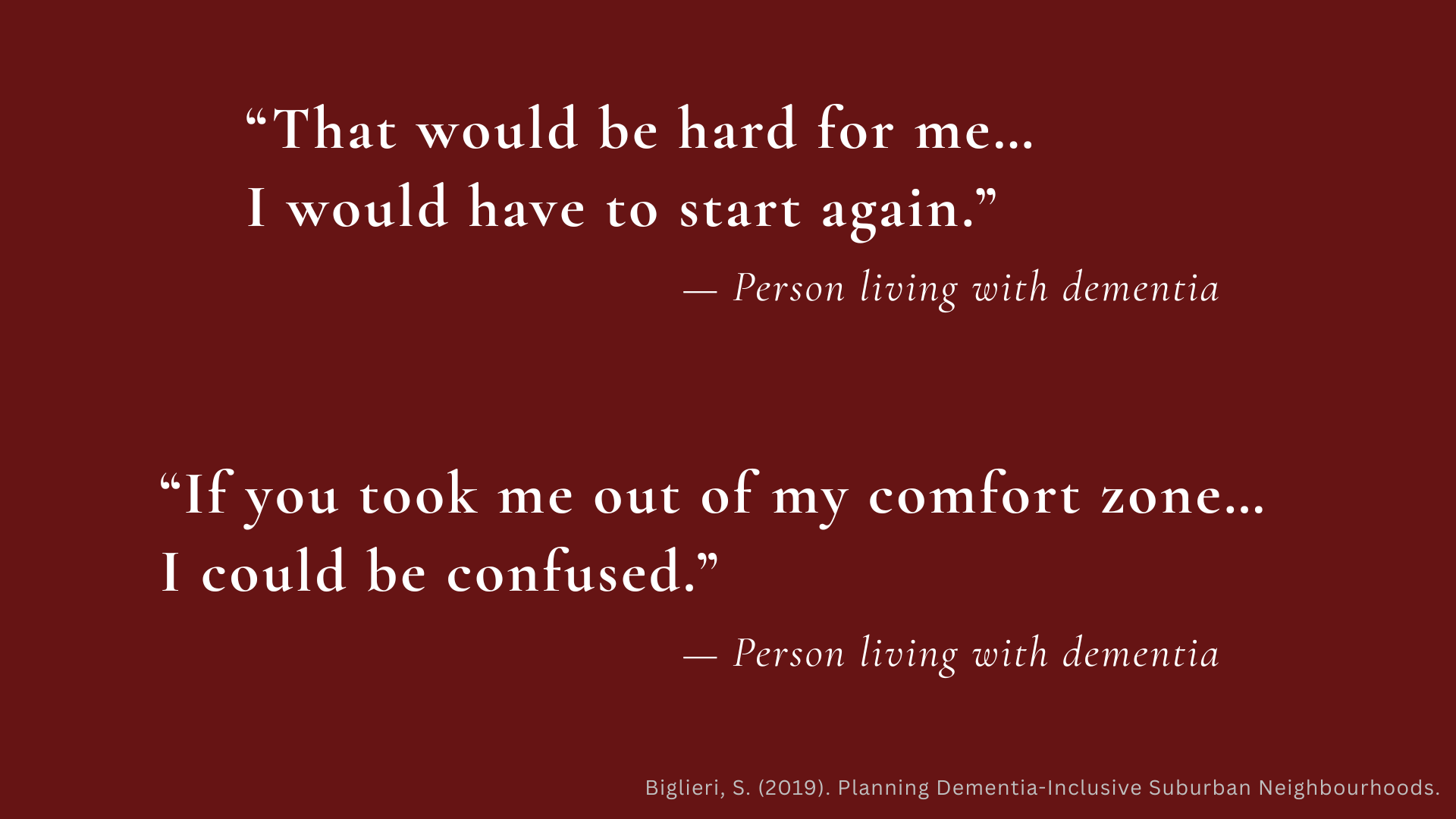
Quotes from people living with dementia. Biglieri, S. (2019). Planning Dementia-Inclusive Suburban Neighbourhoods.
Little London reimagines the Parkwood Hospital lands in London, Ontario as a dementia-friendly village grounded in familiarity, identity, and everyday life. Rather than designing a facility, we designed a place, one that reflects the structure and memory of the city of London itself.
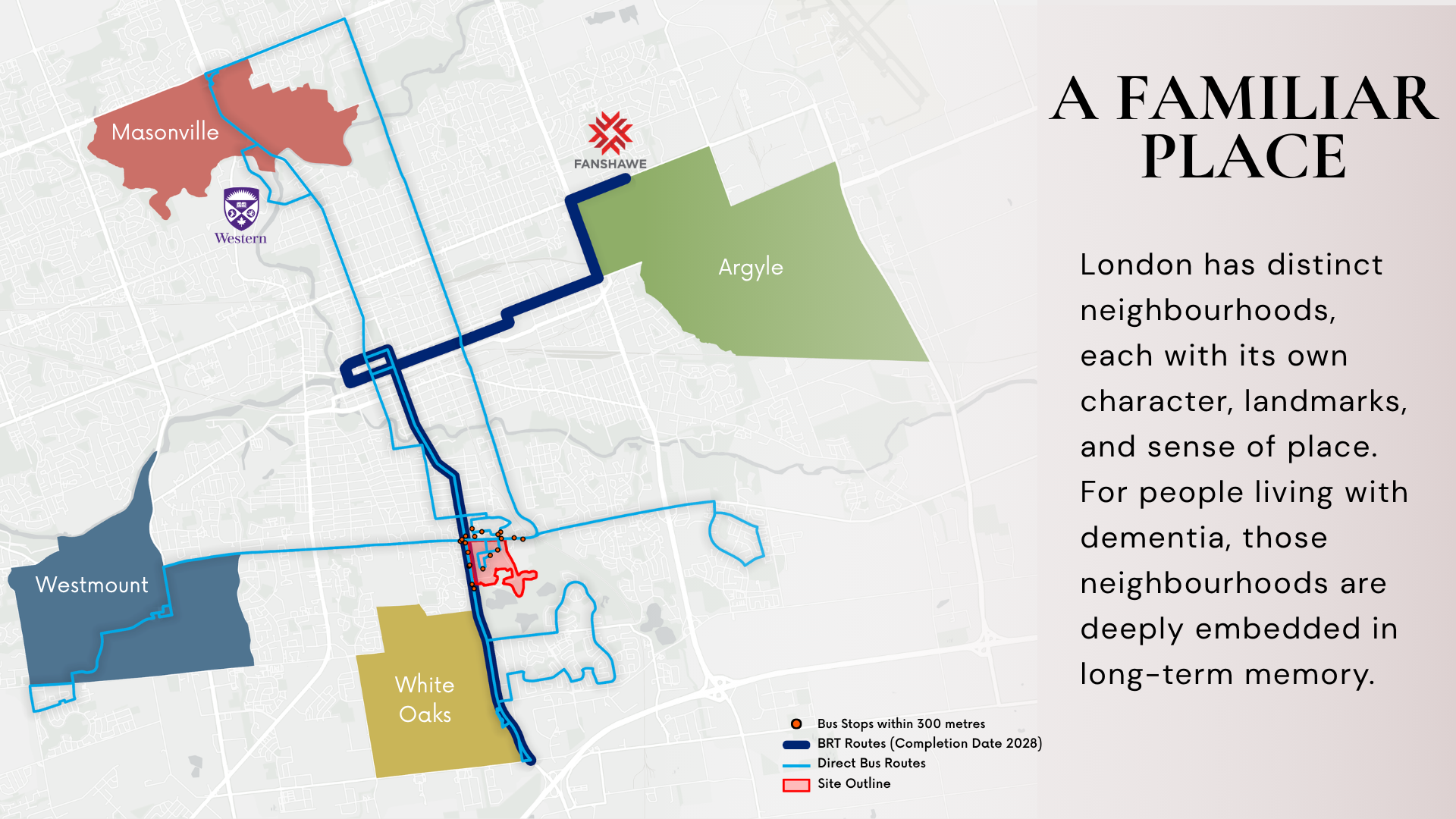
A site map showing four neighbourhoods, Masonville, Westmount, Argyle, and White Oaks, in London.
Four neighbourhoods
Masonville, Westmount, Argyle, and White Oaks are more than just names. They each carry a distinct identity, character, and place within the city. We translated that into the design by organizing the site using the same orientation and structure. This creates a mental map that feels familiar, helping residents navigate and orient themselves more intuitively.
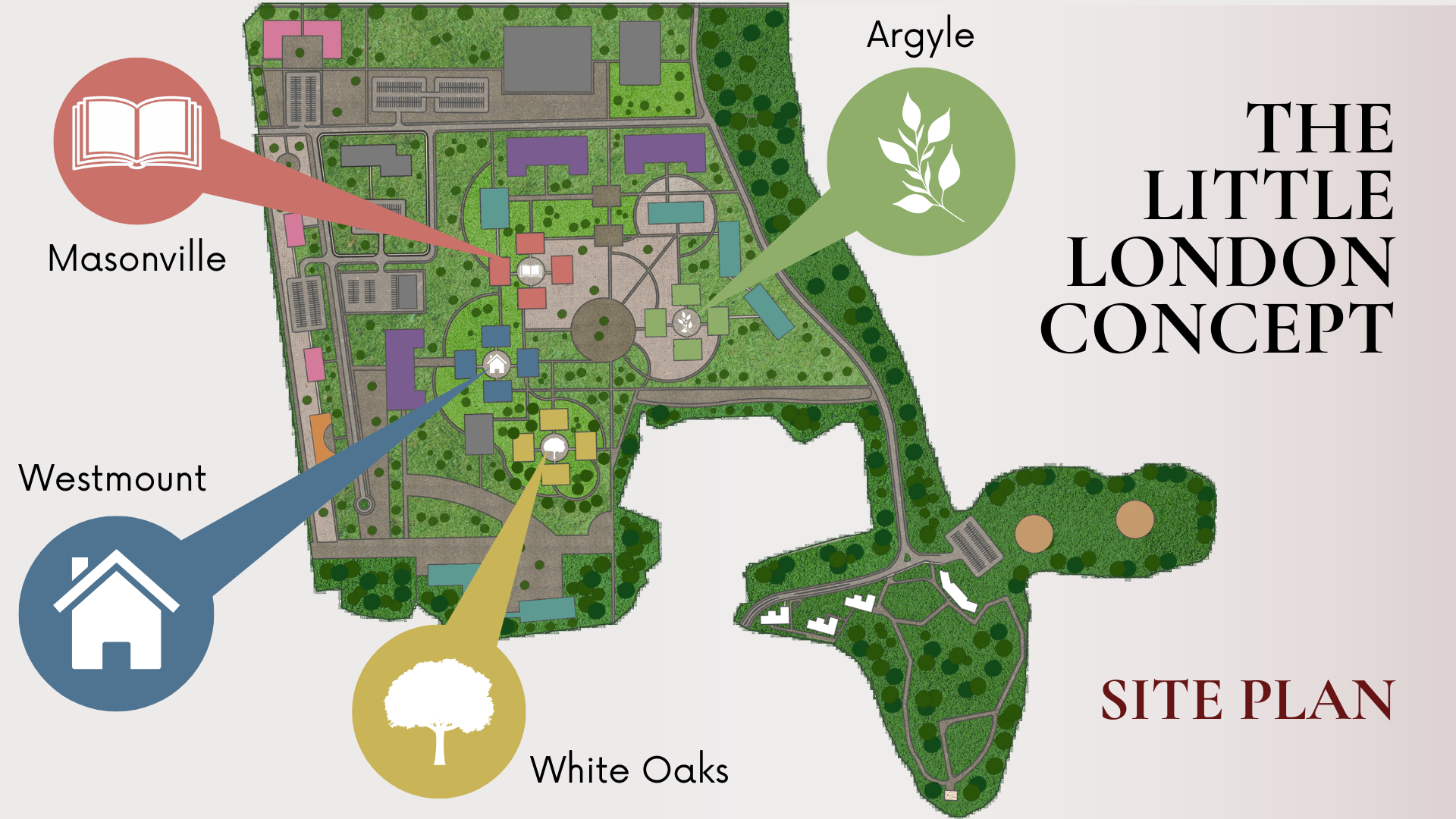
A site plan showing the Little London concept.
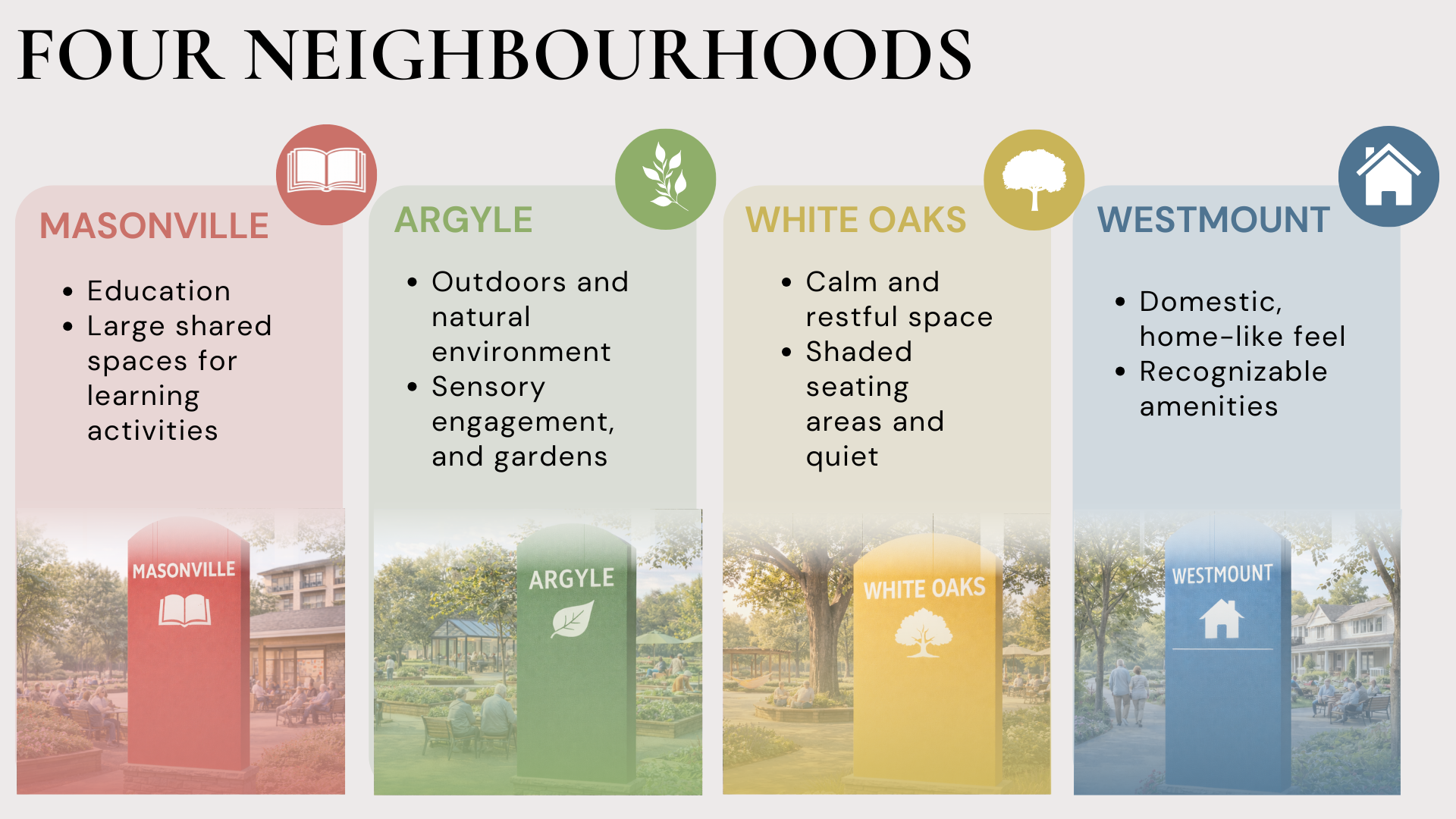
A summary of the features of the four neighbourhood clusters.
Each neighbourhood consists of 4 clusters, with 12 residents per cluster, for a total of 48 residents per neighbourhood.
1. Masonville
A neighbourhood centred on learning and intergenerational connection, reflecting its real-life proximity to Western University, one of Canada’s most research-intensive institutions.
2. Argyle
Located in East London, Argyle is a neighbourhood near the Fanshawe Conservation Area. Argyle in Little London focuses on activities such as gardening and pottery, and emphasizes shared outdoor experiences where residents can cultivate and grow with nature.
3. White Oaks
Designed as a calm, shaded environment for rest and reflection, White Oaks offers shaded seating areas and creates comfortable spaces for outdoor life.
4. Westmount
Inspired by familiar community destinations such as Westmount Mall and the Cineplex theatre, Westmount recreates recognizable everyday experiences that encourage social interaction and community life.
Designing beyond care and supporting the community
Little London is about more than care; it is about belonging. By grounding the village in familiarity, community, nature, and supportive design, we created a place where residents can feel safe, connected, and recognized. Rather than asking people living with dementia to adapt to a new environment, Little London offers a place that feels meaningful, intuitive, and like home.
Little London extends beyond residential care by incorporating amenities that support residents, staff, students, and visitors. On-site staff support facilities and housing promote workforce well-being and help ensure continuity of care.
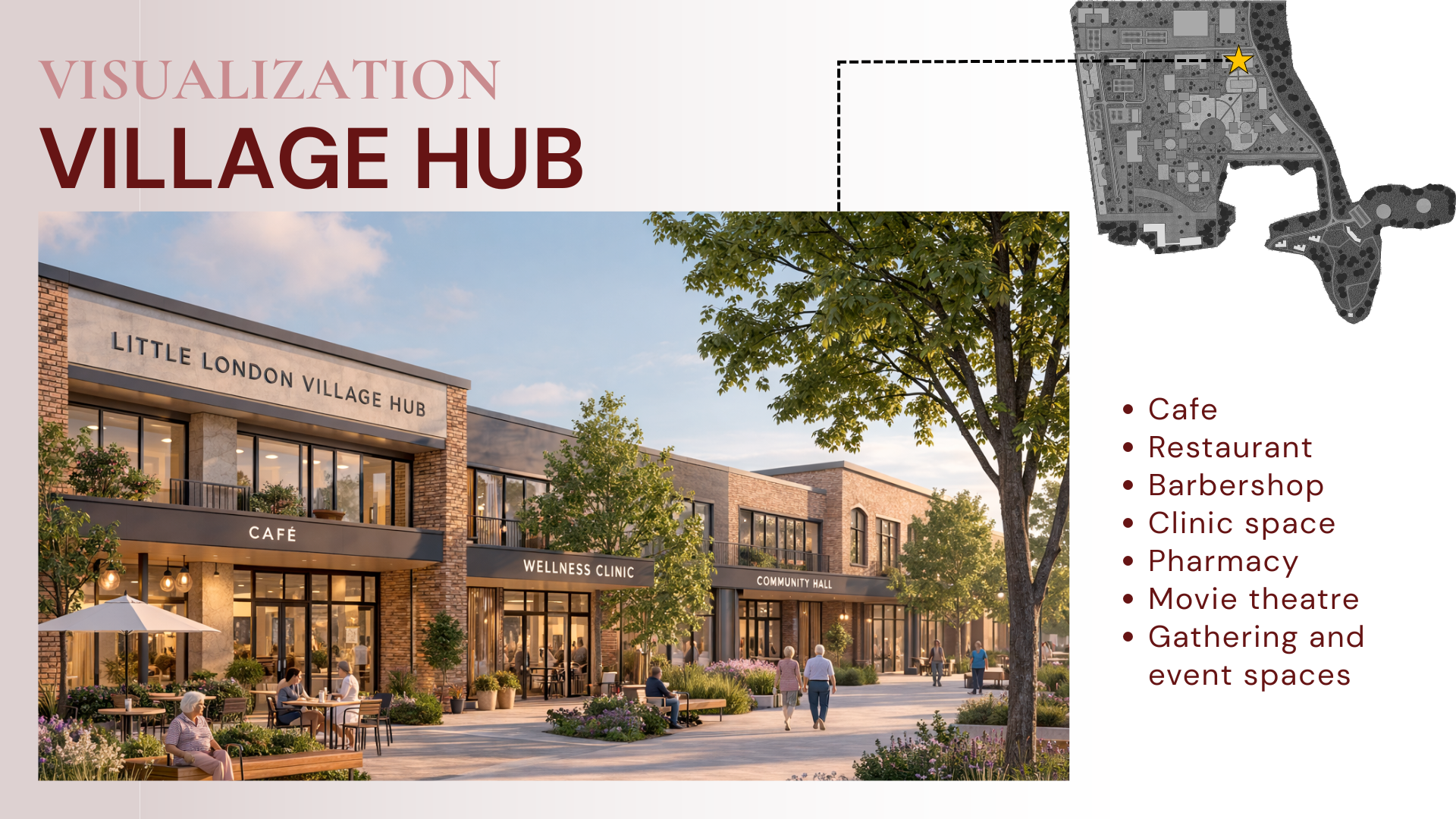
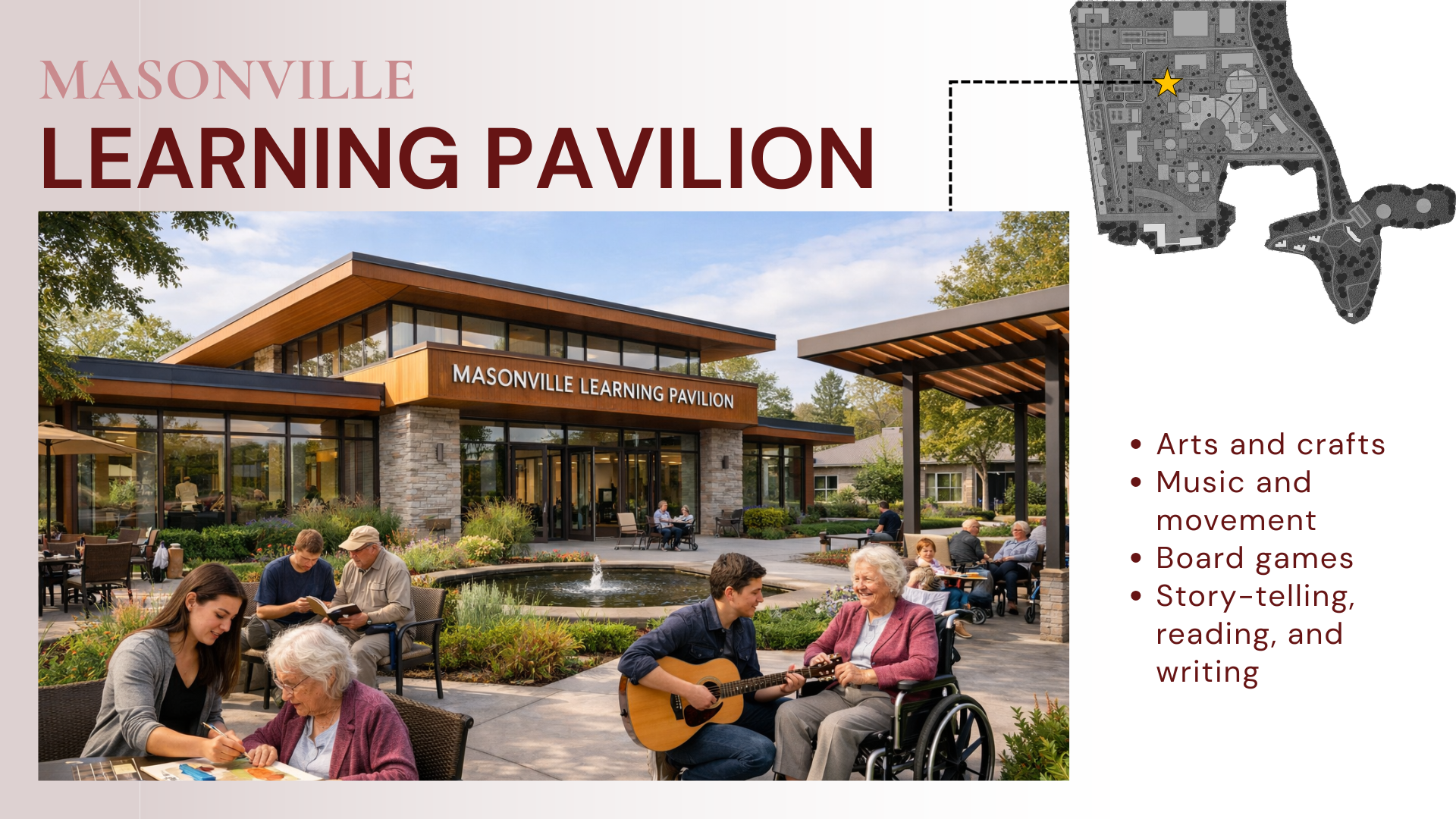
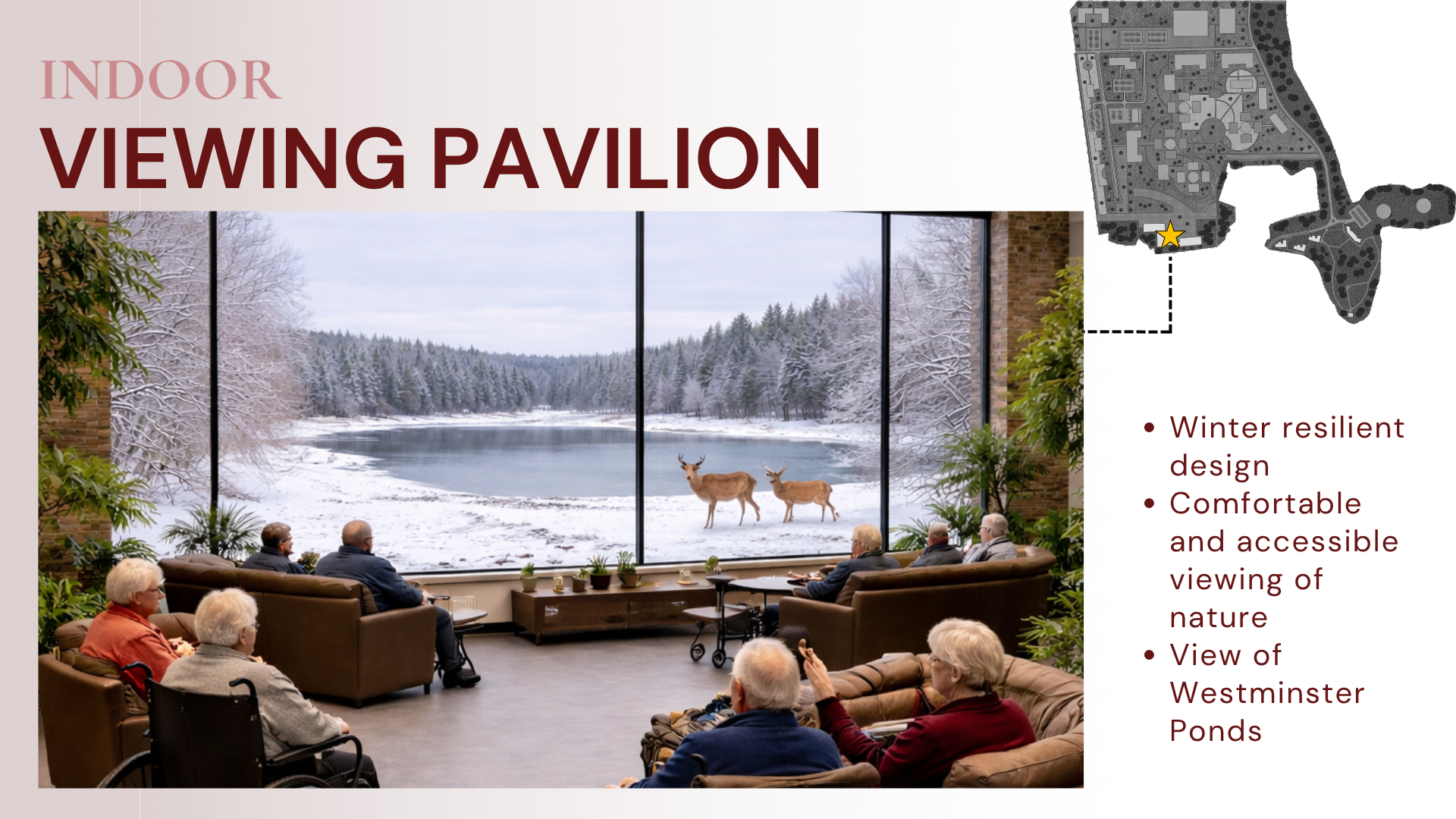
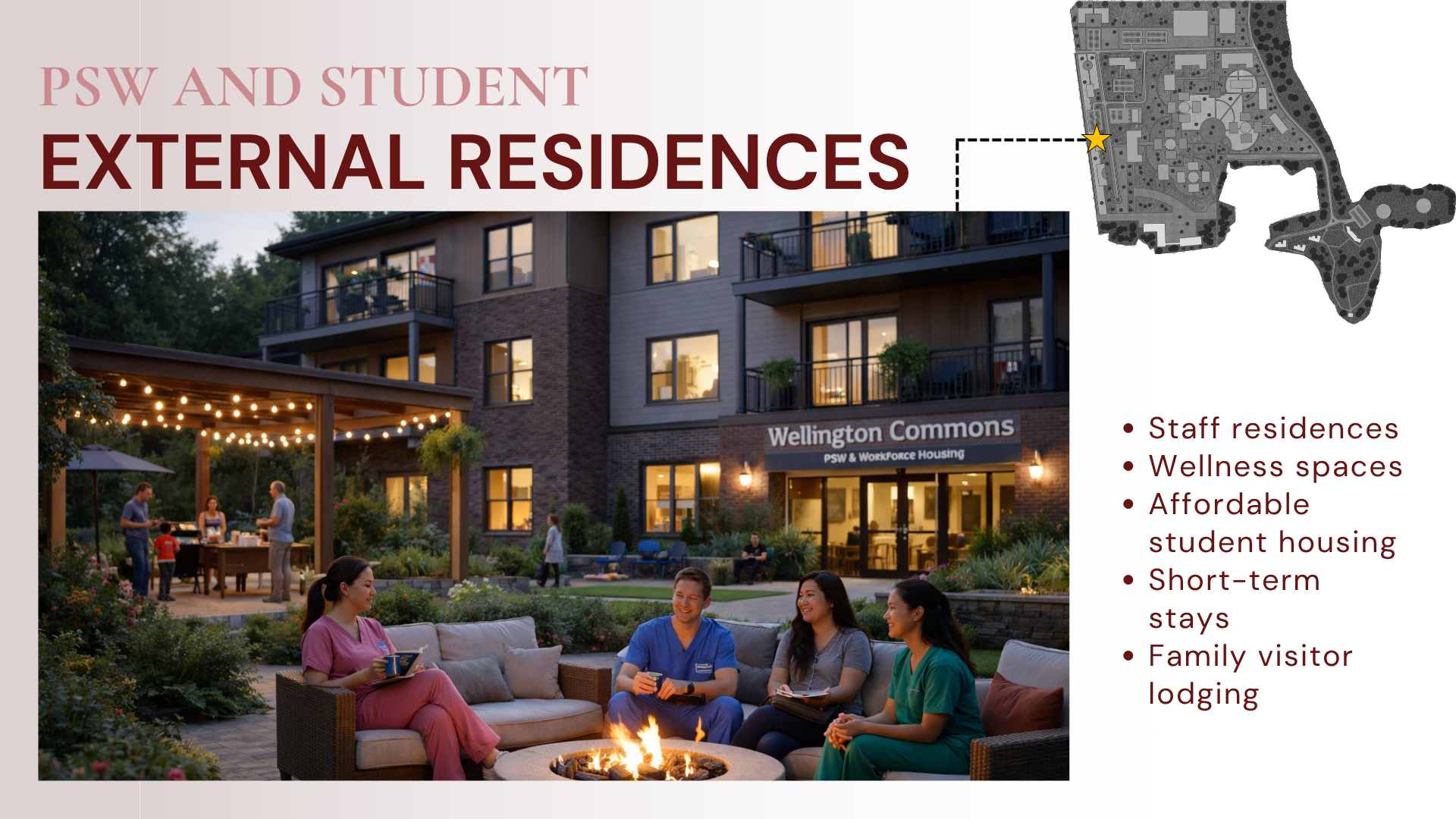
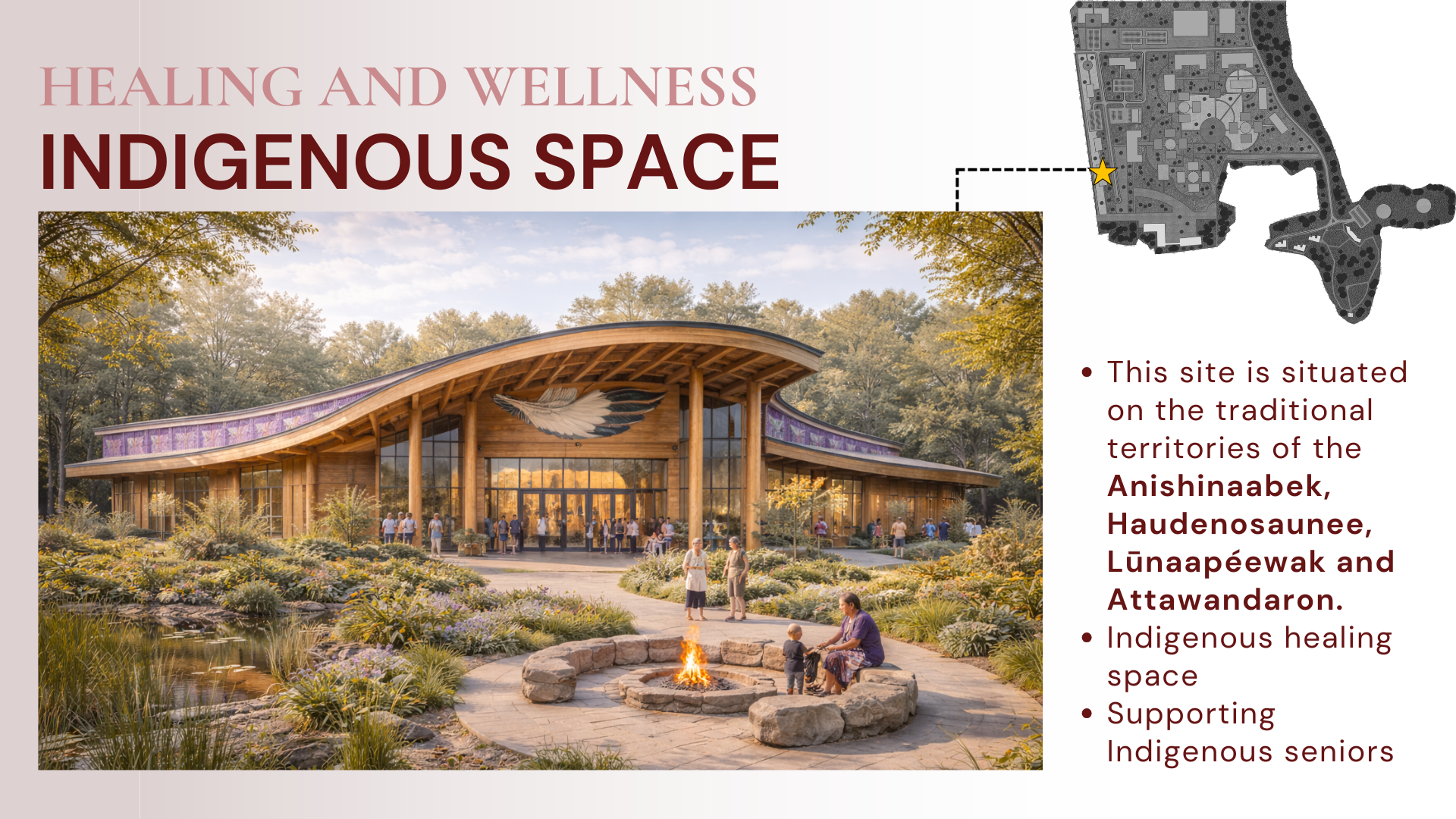
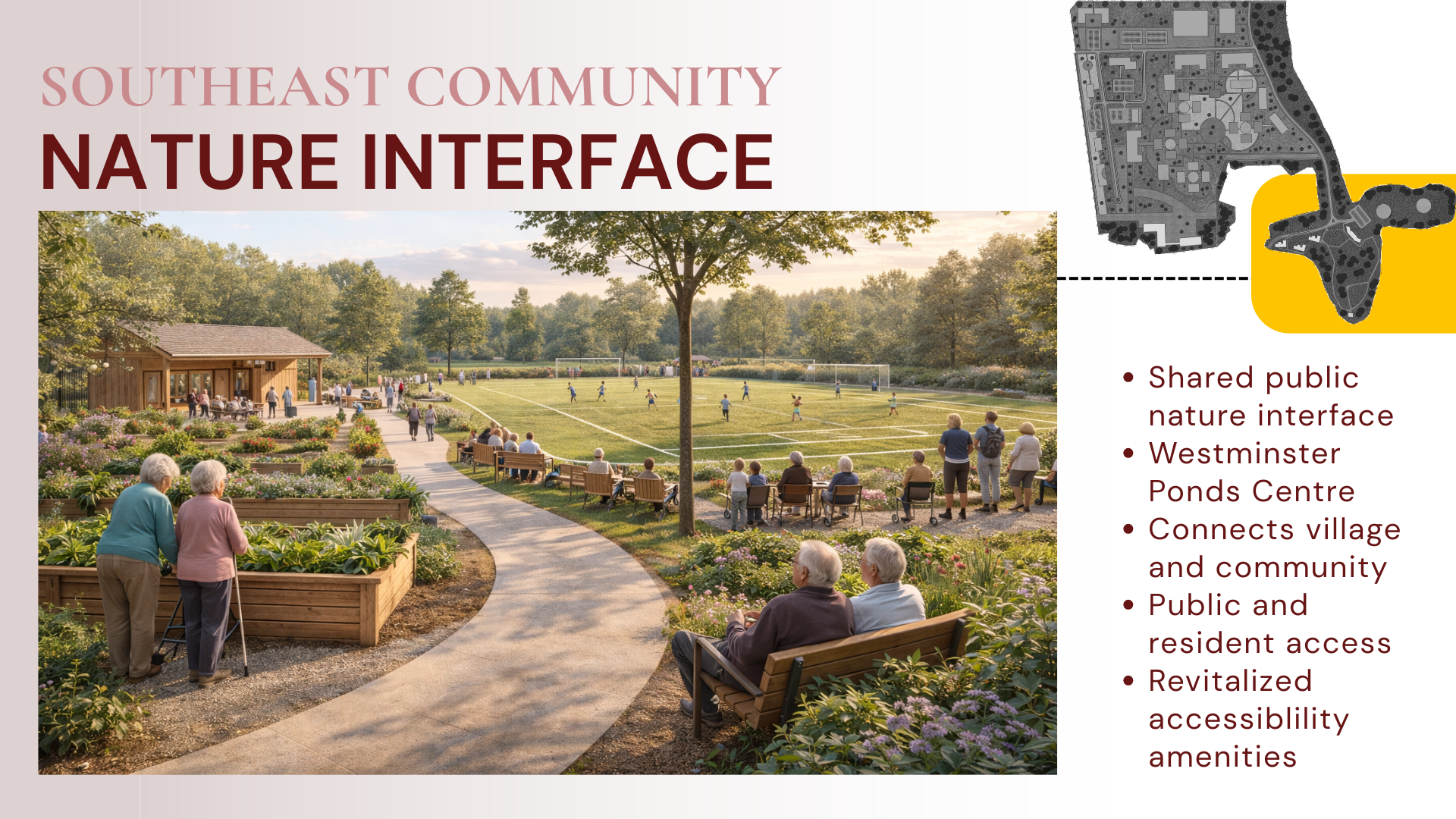
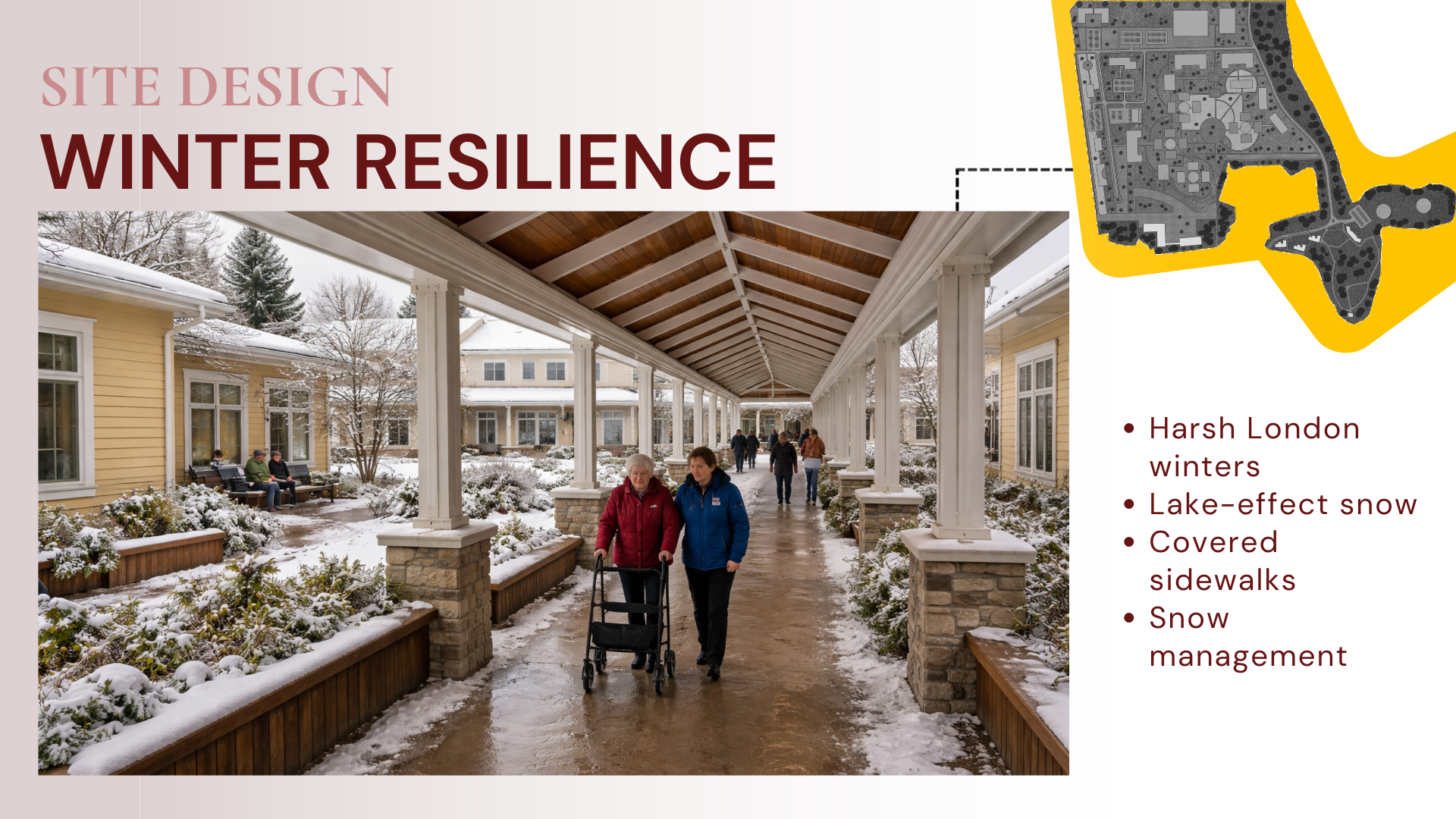
Visualizations:
1. Two Village Hubs located on site.
2. Learning Pavilion located in Masonville.
3. Viewing Pavilion overlooking Westminster Ponds.
4. PSW staff and student housing for nursing and healthcare students from Fanshawe College and Western University completing their placements at Victoria Hospital opposite the site.
5. Indigenous Space open to members of the community.
6. The site design revitalizes the existing Westminster Ponds Environmental Education Centre while connecting Little London with the broader community.
7. Covered walking paths designed for winter weather management.
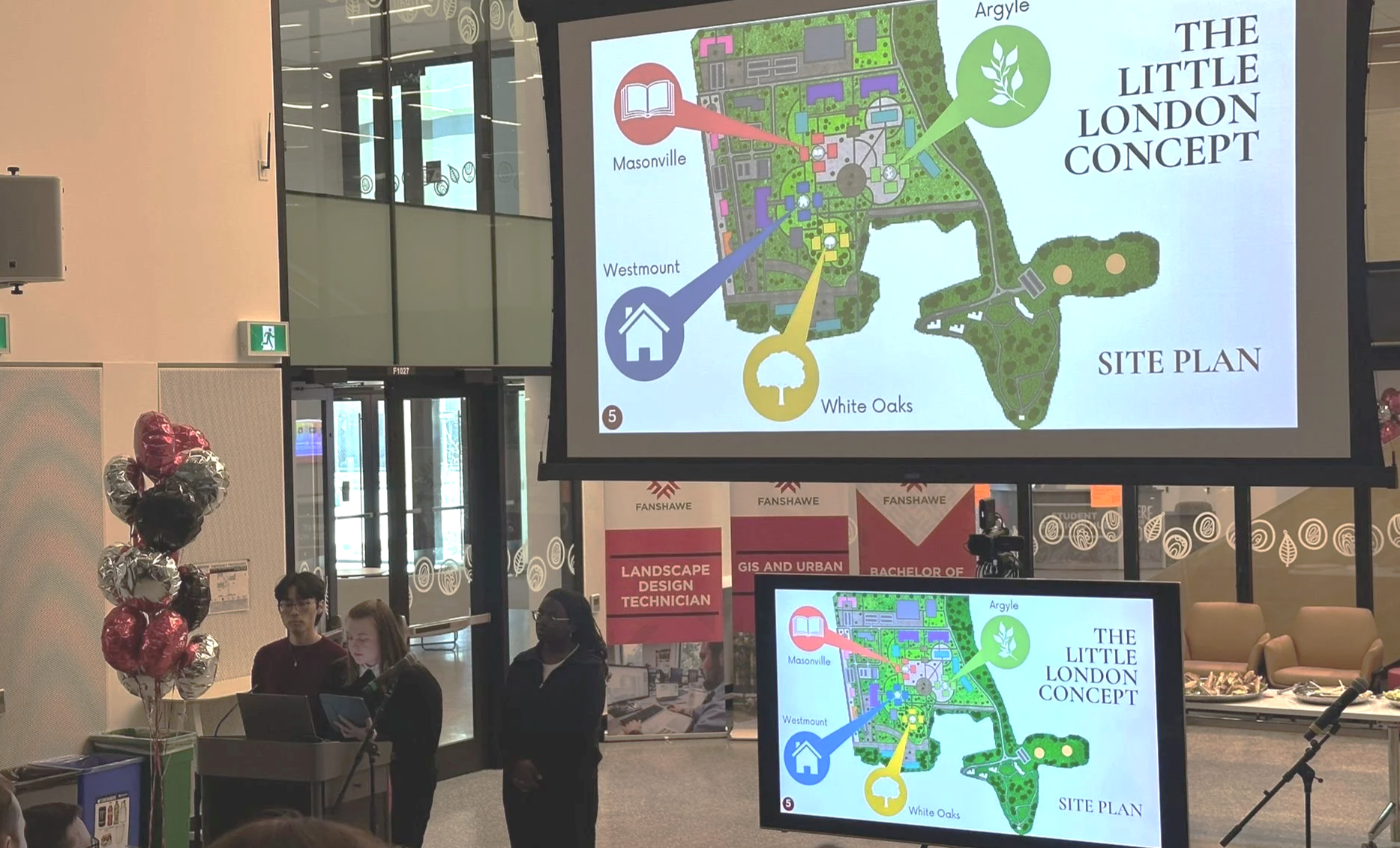
Little London Dementia Village project team photo.
Reflections
Participating in the Environmental Design Competition was an invaluable learning experience. The project challenged the team to combine research, urban planning, and design into a comprehensive proposal. Furthermore, it reinforced the importance of designing communities that support dignity, independence, and belonging for people living with dementia.
Little London demonstrates that dementia-friendly planning is about more than providing care, it is about creating places where people can continue to live their lives in a familiar and supportive environment.
Get to know the students behind Little London
Patricia graduated from Ryerson in 2015, from the Early Childhood Studies program. A couple of years later, she graduated from Fanshawe College with a GIS and Urban Planning degree. Patricia is passionate about community and environmental planning, as she finds her interest intersects between the built environment, open and green space, and the influence of amplified public spaces on the development of personal wellbeing.
Ishimwe is an alumna of York University, graduating with an Honours Bachelor of Arts degree in Global Health. Her interest in urban planning developed through coursework in emergency preparedness and public health, where she explored the intersection of the social determinants of health and their influence on how people grow, live, work and age. She took a particular interest in the role of the built environment, and how it affects community wellbeing and resilience. Ishimwe is passionate about placemaking, emergency management, community health, and is committed to using evidence-based planning and holistic decision-making to create more inclusive, resilient and supportive spaces for all.
Calvin previously graduated with an Honours Bachelor of Arts degree with a double major in Geography and Environment + Sociology, along with a Certificate in GIScience (Geographic Information Science) from Western University. In addition to placemaking and wayfinding, Calvin is passionate about transportation planning and currently works as a research assistant for the TransForm Laboratory, a transportation and land use planning research lab at TMU.
Patricia, Ishimwe and Calvin's submission to the Design Competition was supervised by Dr. Biglieri.